Professional Rodent Control & Structural Exclusion
Rodents such as Norway rats, roof rats, and house mice present serious threats to residential safety. Their continuous gnawing damages electrical wiring—causing house fire hazards—while their urine and droppings contaminate food and carry pathogens like Hantavirus, Leptospirosis, and Salmonella. Professional rodent control combines interior trapping, exterior tamper-resistant bait stations, and rigorous structural exclusion to seal every entry point down to a quarter of an inch.
Warning Signs of Infestation
Early detection protects living spaces and structural wood before populations expand:
- Dark, spindle-shaped droppings in kitchen pantries, drawers, or attic insulation
- Scratching, scampering, or squeaking noises inside walls or ceilings late at night
- Greasy rub marks along baseboards and structural beams where rodents travel
- Gnaw marks on electrical wires, plastic pipes, food containers, or wooden door frames
- Shredded paper, fabric, or fiberglass insulation bunched into nesting material
Common Causes & Attractants
Understanding the environmental vulnerabilities that draw pests to residential properties:
- Unsealed gaps around exterior pipe lines, crawlspace vents, and garage door gaskets
- Tree branches overhanging roof peaks providing roof rats direct attic access
- Pet food bowls left outdoors and bird feeders dropping seeds on the lawn
- Unsecured garbage cans and compost piles near the home perimeter
- Cold autumn and winter weather driving rodents indoors in search of warmth
Professional Service & Eradication Procedure
Trained technicians utilize a multi-step protocol designed for thorough eradication and long-term prevention.
Full Exterior & Interior Inspection
Meticulously checking foundation perimeters, crawlspace access doors, roof eaves, utility conduits, and attic spaces to map rodent entryways and runways.
Comprehensive Structural Exclusion
Sealing openings larger than 1/4 inch with chew-proof galvanized steel mesh, copper mesh, and heavy-duty elastomeric sealants.
Interior Trapping & Population Reduction
Strategic placement of professional mechanical snap traps in secure runways, attics, and sub-flooring to capture rodents trapped inside.
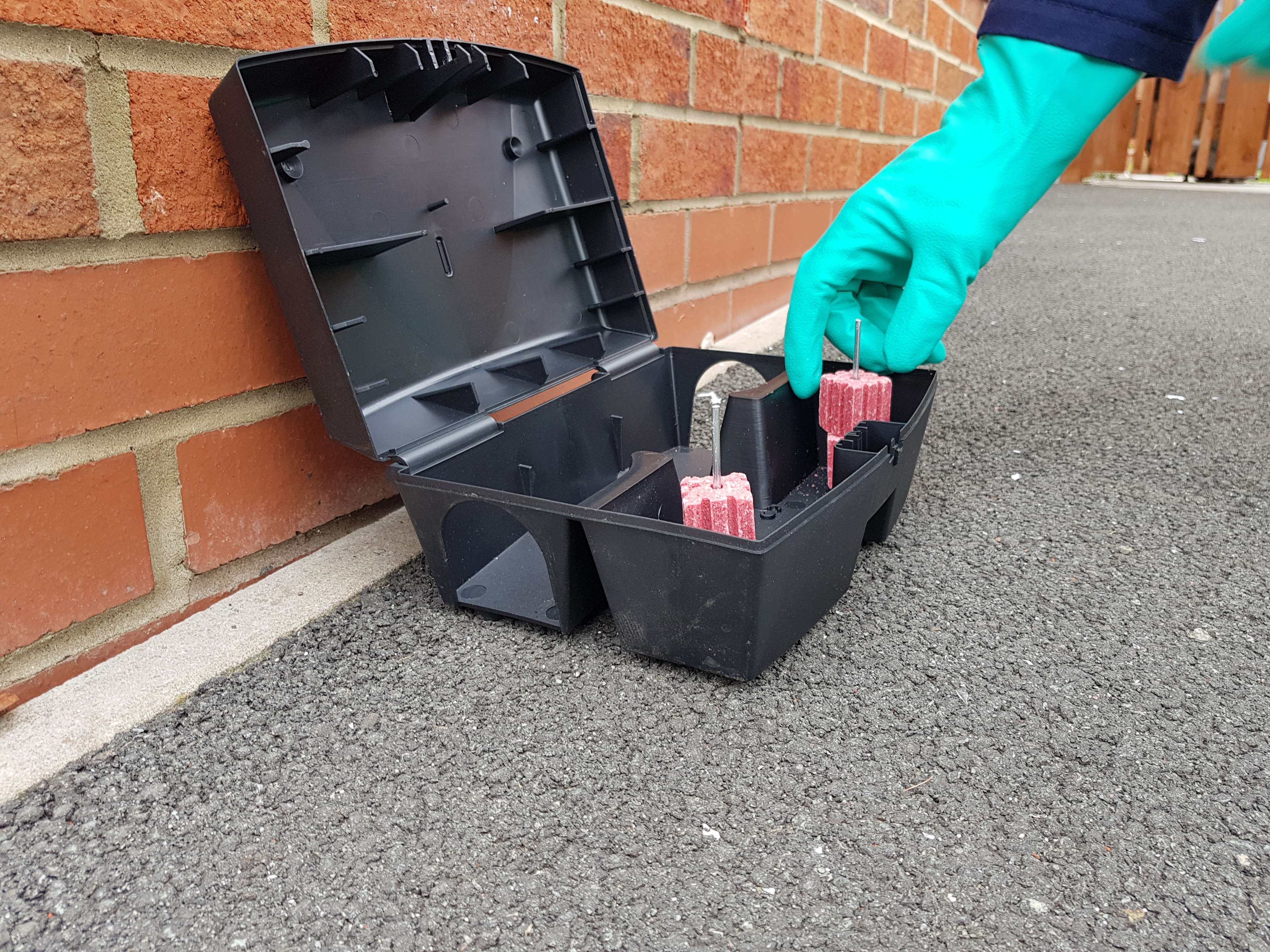
Exterior Tamper-Resistant Bait Stations
Anchoring locked, child- and pet-resistant bait stations around the property perimeter to suppress local outdoor rodent pressure.
Follow-Up Inspection & Verification
Routine checks to remove captured rodents, replenish outdoor stations, and verify that no new entry points have been breached.
Homeowner Action Checklist
Practical steps property owners can take to prevent re-infestation:
- Store pet food, bird seed, and pantry staples in airtight metal or heavy plastic bins
- Clean fallen fruit, nuts, and bird seed debris from your yard
- Keep firewood piles elevated at least 18 inches off the ground and away from walls
- Inspect garage door weatherstripping to ensure no gaps along the concrete apron
- Ensure trash bins have secure, tight-fitting lids at all times
Professional Safety Warnings
Critical safety protocols for residents, children, and pets:
- Never handle dead rodents or droppings with bare hands; use gloves and disinfectants
- Do not sweep or vacuum dry rodent droppings, which can aerosolize infectious pathogens; spray with disinfectant first
- Do not scatter loose poison baits in living spaces or attics where pets could access them
Frequently Asked Questions About Rodent Control
Related Pest Control Services
Need Professional Rodent Control Today?
Speak with local pest control specialists who can evaluate your property and deploy proven eradication solutions.
Click to call directly on mobile
Rodent Control Available Across All 50 States
Explore local pest pressure and city services in your state: